
Ace of Something Is Out
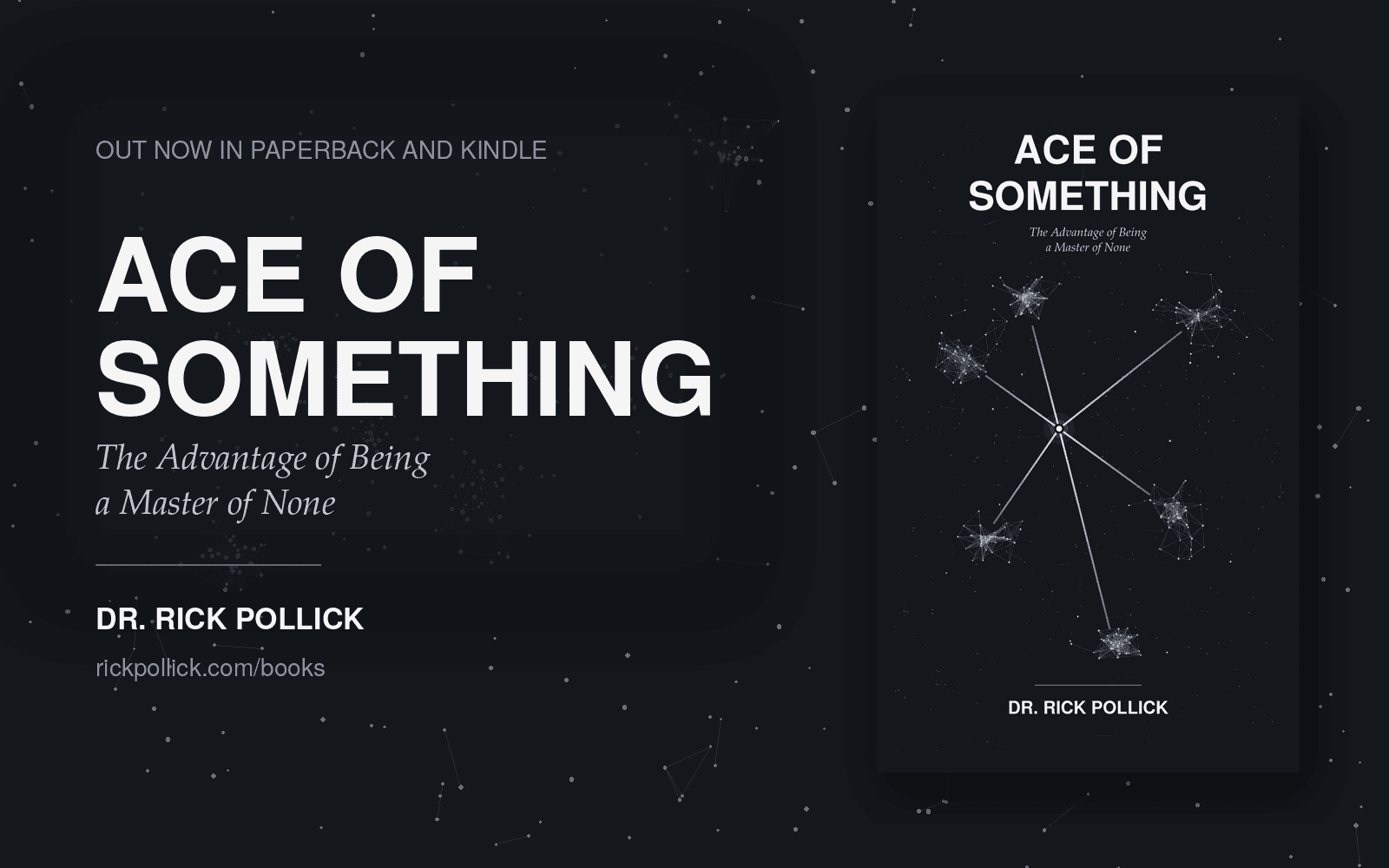
My new book, Ace of Something: The Advantage of Being a Master of None, is out in paperback and on Kindle. It is a career memoir and a field guide for the person who was never the best at any one thing and ended up at the center of the work anyway.
I have never been the best at any one thing in the room. For most of my twenties I read that as the problem. It turned out to be the position.
Ace of Something: The Advantage of Being a Master of None is out in paperback and on Kindle. It is a career memoir and a field guide, in that order, and it is the book I wish someone had handed me at twenty-five, when I was the third best developer on the floor and could not work out why the store operations team kept walking past the better ones to get to me.
Get it on Amazon. Paperback is $12.99, the Kindle edition is a few dollars less, and it is free in Kindle Unlimited.
What it is about
The short version. The person who stands between groups that need each other and do not speak the same language ends up at the center of the work. Not because of a title. Because of a position. Ronald Burt measured this in 2004 and found that the people standing near the holes in an organization had the ideas executives rated highest, got promoted faster, and were paid more. The jack of all trades is, by definition, the person standing in the holes. The insult and the advantage are the same trait.
What I could not find anywhere was a practical account of how you get to that position on purpose, and how you stay in it without it eating you. So I wrote one.
Part I is the memoir. Twenty years, ten employers, one pattern. A manufacturing plant north of Pittsburgh where I was the kid with the screwdriver. A bank, a grocery chain, a national retailer, a mechanical contractor, eight years inside a large health system, and the seats since. Employers are described by industry and location rather than named, and no colleagues are named at all. The stories are mine. The lessons are the point.
Part II is the method. Seven habits, one chapter each. Deliver first, then talk. Gather before you guess. Hear the need under the ask. Make it visible. Stack ordinary skills. Keep a quiet center. Build bridges, not walls. Each chapter ends with a short list called Steal this, because the whole thing is meant to be stolen.
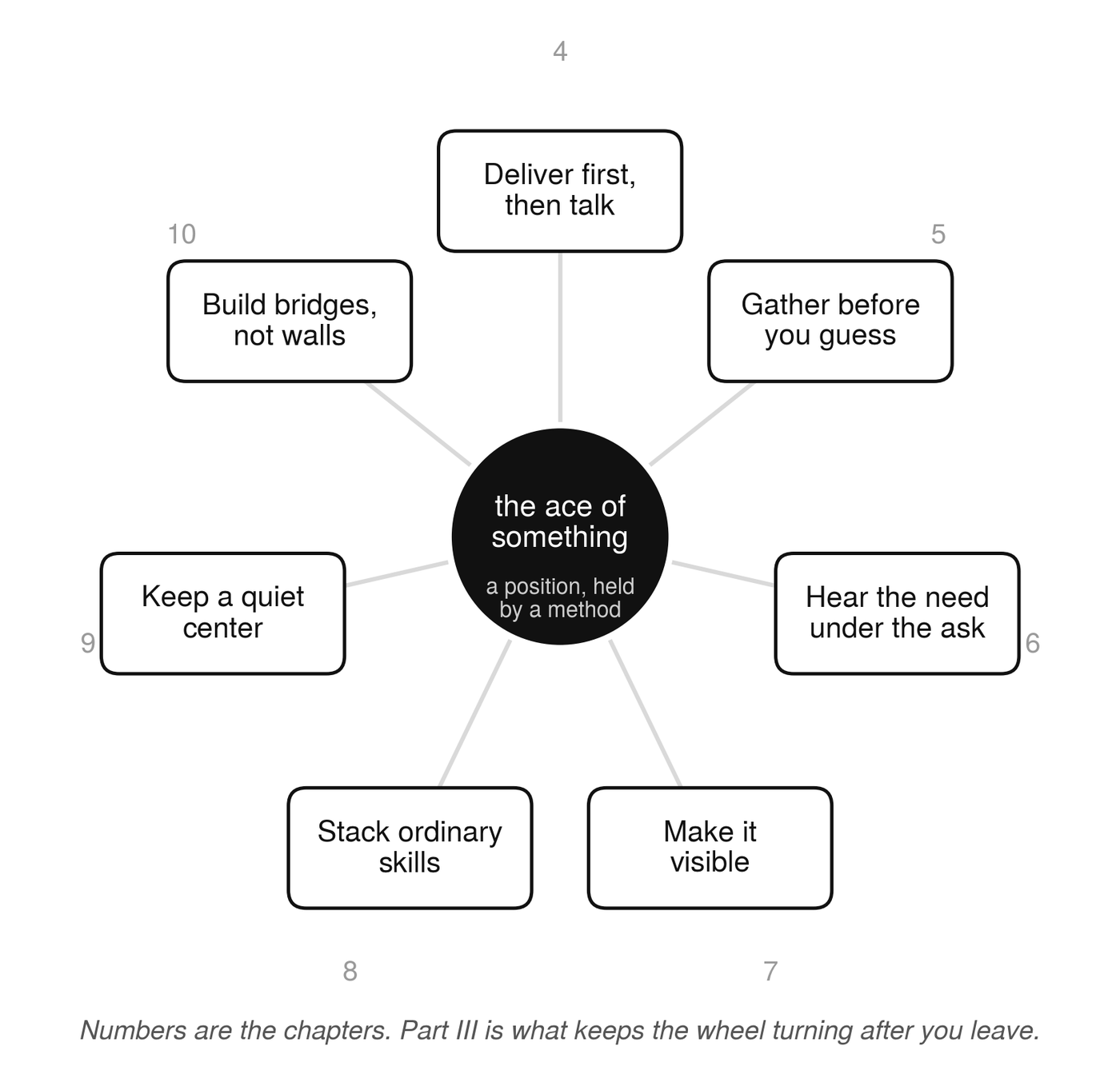
Part III is the part I did not plan to write. Once you are the person everyone comes to, the next problem is that everyone comes to you. So there is a chapter on running the hub as a service, with a five second triage rule and written priority tiers. There is a chapter on giving the hub a brain, which grew out of an essay on this blog about what an AI agent should draft for you and what it must never touch. And there is a chapter on handing the whole thing off before it owns you, because the point of being central was never to become irreplaceable.
Two appendices close it out. The first ninety days in a new seat, and every template the method runs on: the evening summary, the one-page status, the decision log, the request door, the load list, the register, the runbook, the four line crisis script, and the brain on one page.
Who it is for
Not the specialist who loves the deep end and is happy there. The book has nothing but respect for that person, and it says so.
It is for the project manager, the analyst, the scrum master, the technical person on a business team, the senior individual contributor who runs things without the title, and anyone who has been told to pick a lane and quietly suspected the lane was the wrong question. If you have ever been the one people walk over to with a quick question that is not remotely your job, this is your book.
How it was made
Same way as the last two. Written in markdown, typeset with XeLaTeX, figures drawn in code, cover drawn in code, no publisher. The two volumes of More Clarity, Less Noise are still there if you want the essays. This one is a different kind of book. One argument, start to finish.
One ask
If you read it and a chapter lands, an Amazon review does more for an independent book than anything else I can do. Honest, short, and real. Three sentences is plenty. If it does not land, tell me why, and the next one will be better for it.
Ace of Something on Amazon. Thank you for reading along.