
Deprecation Debt: The Hidden Liability in AI-Accelerated Delivery
AI made writing code nearly free, but retiring it never got cheaper. That gap compounds into deprecation debt, a fast growing form of technical debt: dead paths, stale APIs, and un-migrated systems that quietly cap delivery throughput. Here is how to measure and govern it before it stalls your team.
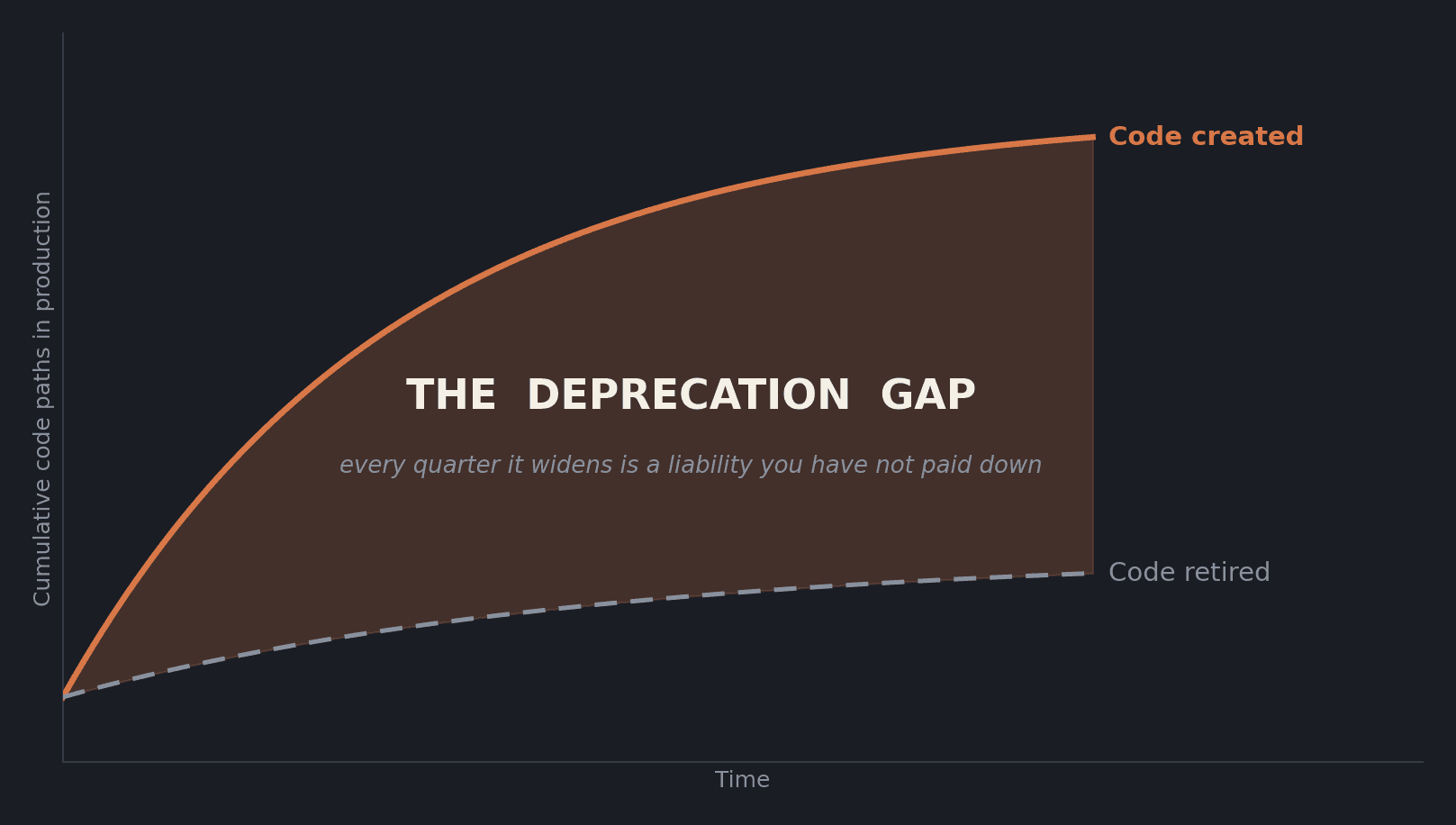
Your engineering organization spent the last year getting dramatically faster at producing code and no faster at all at getting rid of it. Coding agents write, complete, and duplicate on demand. Nothing on the other side of the ledger changed. Deleting a service, retiring an endpoint, and moving the last three callers off a deprecated library still take the same meetings, the same risk reviews, and the same careful hands they always did. That asymmetry has a name once you start managing it as a number: deprecation debt. It is the growing pile of code, endpoints, flags, and systems your organization has decided to stop investing in but has not actually removed, and in an AI-accelerated shop it compounds faster than anything on your roadmap.
Members only
Keep reading for $2 / month.
The rest of this essay — along with every other members-only post, playbook, and working note — is behind a small paywall. Cancel anytime.
Payment handled by Stripe. Card details never touch this site.